

← Back to News
LinkedIn
Martin F. Heidecker
|
LYNX Lining TPU wear protection linings in rail transport
Machines process track ballast at 800 m³/h with grain sizes of 31.5–63mm. In a master's thesis, LYNX Lining achieved the lowest abrasion value of all 13 materials tested.
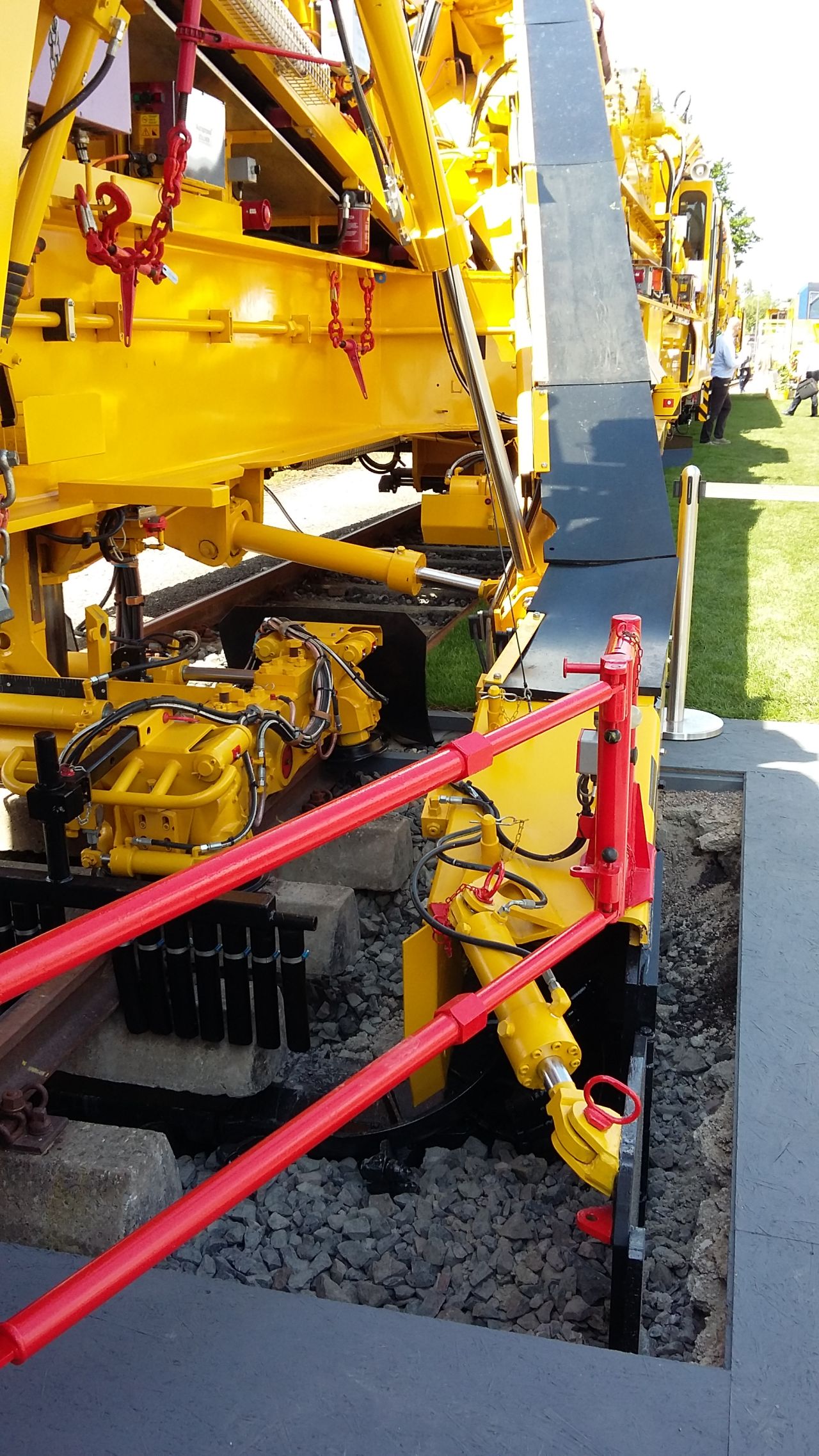
LYNX Lining TPU wear protection linings for use in the railway sector
Railway construction machines for track maintenance are in use worldwide around the clock and ensure accident-free and smooth railway operations.
Very often, maintenance work such as replacing the track ballast or rails is carried out during the night. It is a legal requirement that railway construction machines operate as quietly as possible.
The ultra-modern trains are equipped with high-tech equipment and move enormous quantities of track ballast (800 m³/h) with a grain size of 31.5 mm to 63 mm. Track ballast is hard rock such as granite or diabase and so the stressed surfaces are exposed to extreme wear. High-tech wear protection solutions are required that are resistant, reduce noise and vibrations and have the lowest possible density, thus saving weight.
LYNX Lining has exactly these properties and there is also a scientific study that was carried out on behalf of Bernegger GmbH as part of Ms. Dipl.-Ing.'s master's thesis. Lucia Lipp, was carried out in the AC2T materials laboratory under the supervision of TU Vienna in 2022. Up to 13 different wear protection materials, which are used in the Loja hard stone plant (Lower Austria), took part in this material study. When it came to fine and abrasive rock (quartz sand), LYNX Lining performed best of all the materials examined with the lowest abrasion value (16.9 mm³).
The LYNX Lining Ultra were also examined in the master's thesis and they performed at the top. The surface absorbs less impact energy and thus the service life is significantly extended.
Another area of application for LYNX Linings is the lining of railway wagons for the transport of a wide variety of goods, such as iron ore, coal, cement, lime, artificial fertilizer, salt, agricultural products such as beets, potatoes and grain, gravel, scrap metal, residues for thermal waste recycling plants, sewage sludge and waste from the steel and aluminum industries.
The surfaces of the transport wagons must be able to withstand the abrasion of the materials being transported and also be easy to clean. This is where chemistry comes into its own. Resistance of LYNX Linings to oils, fats, fuel, urea, slags from waste recycling plants and waste materials from aluminum production is paid for.
This means that service life can be extended enormously and maintenance and cleaning costs can be significantly reduced. Examples from customers in gravel production show that maintenance costs could be reduced by -80% thanks to LYNX Linings.
Railway construction machines for track maintenance are in use worldwide around the clock and ensure accident-free and smooth railway operations.
Very often, maintenance work such as replacing the track ballast or rails is carried out during the night. It is a legal requirement that railway construction machines operate as quietly as possible.
The ultra-modern trains are equipped with high-tech equipment and move enormous quantities of track ballast (800 m³/h) with a grain size of 31.5 mm to 63 mm. Track ballast is hard rock such as granite or diabase and so the stressed surfaces are exposed to extreme wear. High-tech wear protection solutions are required that are resistant, reduce noise and vibrations and have the lowest possible density, thus saving weight.
LYNX Lining has exactly these properties and there is also a scientific study that was carried out on behalf of Bernegger GmbH as part of Ms. Dipl.-Ing.'s master's thesis. Lucia Lipp, was carried out in the AC2T materials laboratory under the supervision of TU Vienna in 2022. Up to 13 different wear protection materials, which are used in the Loja hard stone plant (Lower Austria), took part in this material study. When it came to fine and abrasive rock (quartz sand), LYNX Lining performed best of all the materials examined with the lowest abrasion value (16.9 mm³).
The LYNX Lining Ultra were also examined in the master's thesis and they performed at the top. The surface absorbs less impact energy and thus the service life is significantly extended.
Another area of application for LYNX Linings is the lining of railway wagons for the transport of a wide variety of goods, such as iron ore, coal, cement, lime, artificial fertilizer, salt, agricultural products such as beets, potatoes and grain, gravel, scrap metal, residues for thermal waste recycling plants, sewage sludge and waste from the steel and aluminum industries.
The surfaces of the transport wagons must be able to withstand the abrasion of the materials being transported and also be easy to clean. This is where chemistry comes into its own. Resistance of LYNX Linings to oils, fats, fuel, urea, slags from waste recycling plants and waste materials from aluminum production is paid for.
This means that service life can be extended enormously and maintenance and cleaning costs can be significantly reduced. Examples from customers in gravel production show that maintenance costs could be reduced by -80% thanks to LYNX Linings.